Architectural Hardware Maintenance Guide for Building Owners and Facilities Teams
Architectural Hardware: A Practical Lifecycle & Compliance Guide for Building Owners and Facilities Teams
Architectural hardware is rarely the headline feature of a building. It is handled thousands of times a day, expected to perform without complaint, and often only noticed when something goes wrong. But hinges, closers, lockcases, cylinders, panic devices and electromagnetic hold-open systems are not decorative accessories. They are operational, safety-critical components, many of which sit directly within your fire strategy, escape routes and access control systems.
In 2026, maintenance of architectural hardware is no longer simply a caretaker task. It forms part of demonstrable compliance, asset protection and lifecycle planning. This guide sets out what building owners, estates teams and facilities managers need to understand, and what good looks like in practice.
Why Hardware Maintenance Is a Compliance Issue
Current health and fire safety legislation requires that systems capable of developing dangerous faults are subject to suitable maintenance regimes.
In practical terms, that includes:
- Fire doors and their hardware
- Panic and emergency exit devices
- Door closers and floor springs
- Electromagnetic hold-open systems
- Access control components with mechanical elements
If a fire door fails because the closer leaks, the latch no longer aligns, or the panic device has not been maintained in accordance with its certification – the issue is no longer cosmetic. It becomes a safety and liability concern. Maintenance is not optional. It is expected.
The Owner’s Responsibility
The onus sits clearly with the building owner, employer or occupier to ensure:
- Maintenance routines are carried out
- Defects are remedied
- Records are kept
- Work is undertaken by suitably proficient individuals
This becomes particularly important in healthcare environments (high traffic + vulnerable occupants), education buildings (constant daily use), hospitality and commercial sites (public access + reputational exposure) and multi-tenant commercial properties (shared responsibility structures). Hardware failures in these sectors are rarely isolated. They often expose gaps in inspection and documentation.
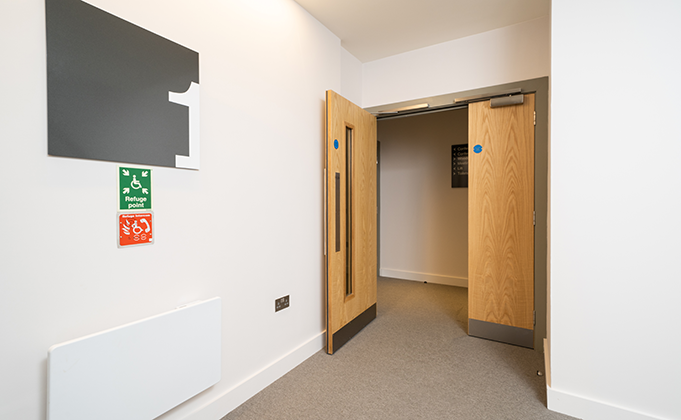
Leaf and a half timber fire door with access control hold open system and integrated hardware
What Hardware Should Be Maintained (and how often)
One of the most common questions we are asked is: “How often should architectural hardware be inspected?” The answer depends on usage – but there are clear minimum expectations grounded in standards and best practice.
MONTHLY
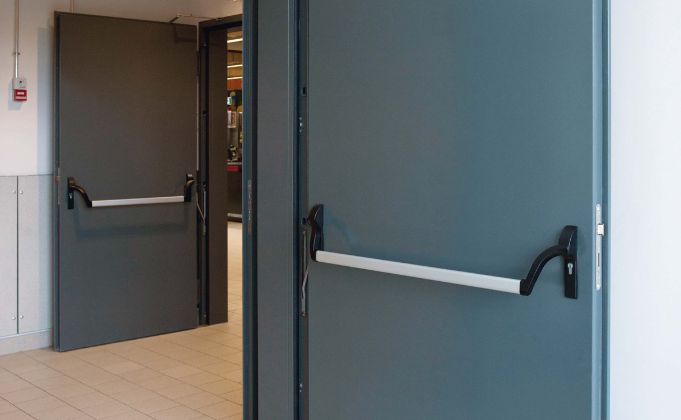
Monthly Checks (Minimum for Many Escape Components)
Under BS EN 179 and BS EN 1125, emergency and panic exit devices must be checked at intervals of not more than one month by the owner or their representative. Failure to carry out these checks can invalidate certification. It is frequently overlooked.
Monthly checks should include:
- Operating force and smooth release
- Confirmation that latches fully engage
- Verification that no additional locking devices have been added
- Fixings secure and unaltered
- Doors closing fully into frame
WEEKLY
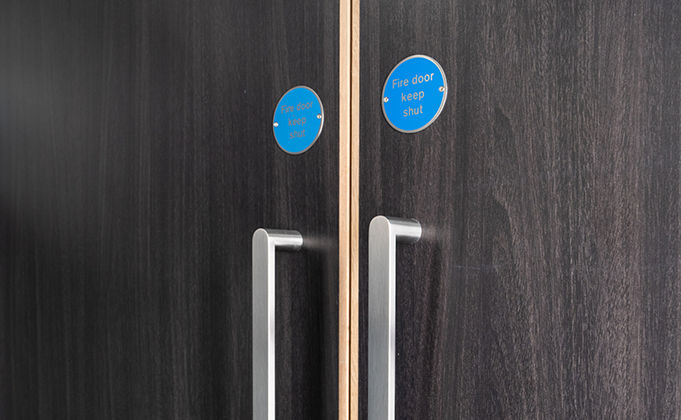
Weekly Checks (Fire & Electromagnetic Devices)
Electromagnetic hold-open devices must be tested weekly in accordance with fire precaution procedures. Any failure to close must be rectified immediately. In high-traffic healthcare and commercial settings, this level of discipline is essential.
Weekly checks should include:
- Simulating fire alarm activation
- Simulating power failure
- Confirming immediate release and full closure
QUARTERLY
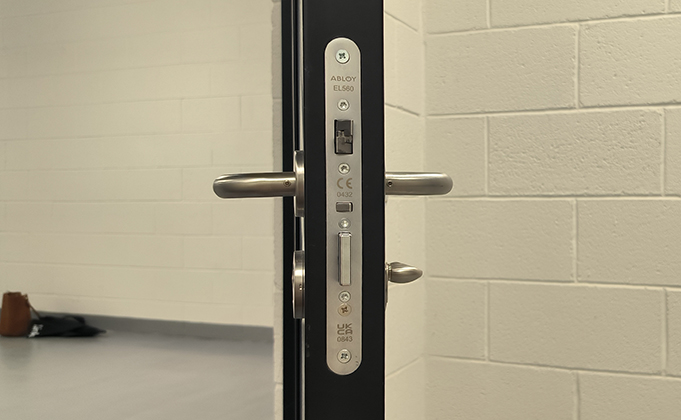
Quarterly Checks (Mechanical Integrity)
These inspections prevent gradual deterioration from becoming operational failure. Quarterly reviews are typically appropriate for:
- Door closers (leaks, speed control and fixings)
- Lever and pull handles (alignment and fixings)
- Mortice locks (smooth operation, strike alignment)
- Floor springs (alignment and closure performance)
ANNUALLY

Annual Checks (Cylinders & Cycle-Based Components)
Cylinders should be checked at least once per year or every 5,000 cycles. Battery-powered digital locks should have:
- Weekly battery monitoring
- Annual mechanical checks
In master-keyed systems, secure storage of the lock chart is also essential for lifecycle control.
Real-World Failure Patterns We See
Maintenance gaps rarely present as dramatic failures. They develop quietly. And, over time, they become normalised.
1. The “Door That Needs a Push”
It usually starts subtly. A door that once closed cleanly now hesitates before latching. The closer has lost a little tension. The seals have stiffened. The latch is slightly out of alignment with the strike plate. Staff adapt. They give it an extra push on the way past. Someone mentions it in conversation – but it still “works.”
Weeks turn into months. The workaround becomes routine. Until one day it doesn’t close at all. Within a fire strategy, a door that does not consistently self-close and latch is not a minor defect – it compromises compartmentation. But because the deterioration was gradual, it was never treated as urgent.
2. Panic Hardware That Was Never Force-Tested
Panic bars and emergency exit devices are often visually inspected. They are rarely measured. Over time, hinges settle. Doors drop slightly. Strike plates shift. Operating forces increase incrementally. The device still releases – but it now requires noticeably more pressure than when first installed.
No one measures it. No record is made of the change. During an audit or post-incident review, the question shifts. It is no longer “does it open?” but “can you demonstrate it remains compliant with its certified operating force?” Without documented monthly checks and recorded force testing, the answer becomes uncertain.
3. Stainless Steel in Harsh Environments
Corrosion conversations often begin with: “But it’s stainless steel.” In coastal hotels, swimming pools, plant rooms or industrial facilities, airborne chlorides and aggressive cleaning agents slowly attack surface finishes. Tea-staining appears. Small rust spots form around fixings. Pitting develops where moisture collects.
Sometimes the wrong grade was specified. Sometimes cleaning frequency was too low – or chlorine-based products were used without realising the long-term impact. Stainless steel is corrosion resistant, not corrosion proof. Where maintenance is inconsistent, deterioration is usually environmental and procedural – not a product defect. Left unaddressed, cosmetic staining becomes structural degradation.
4. Digital Locks With Dead Batteries
Battery-powered digital locks rarely fail without warning. Most systems provide a low-battery indicator – a flashing light, a beep sequence, or a management system alert. But in busy education or commercial environments, these warnings are often postponed until a classroom cannot be opened, a meeting room is inaccessible, or a hotel guest cannot enter their room. What was a simple preventative battery change becomes an urgent callout.
These are not complex failures. They are planning failures. Routine checks – logged and scheduled – prevent disruption entirely.
Across all four examples, the pattern is the same. The issue was visible – just not prioritised. The deterioration was gradual – just not documented. The risk was manageable – until it wasn’t. That is why structured inspection matters. Not because hardware fails dramatically, but because it fails quietly first.
Maintenance Is Also About Warranty Protection
KCC products are supplied with warranty terms covering mechanical components under normal wear and tear.
However, warranty exclusions include:
- Insufficient care and maintenance
- Misuse or neglect
- Abrasive cleaning damaging finishes
- Unauthorised alterations
In other words, poor maintenance can invalidate warranty protection. Lifecycle thinking protects both performance and commercial value.
What Good Hardware Strategy Looks Like in 2026
A compliant hardware strategy should include:
- A documented inspection schedule
- Monthly checks of emergency exit hardware
- Weekly checks of electromagnetic hold-open systems
- Quarterly mechanical inspections
- Annual review of cylinders and digital components
- Recorded findings and remedial tracking
- Use of equivalent or superior replacement parts only
This is not over-engineering. It is defensible asset management.
Sector Considerations
Healthcare buildings place a different level of demand on architectural hardware. It is not just higher footfall, it is the combination of constant use, vulnerable occupants, strict infection control regimes and the need for reliable performance at all times.
Doors in hospitals and primary care facilities are opened thousands of times each week. Beds, trolleys and equipment pass through continuously. Cleaning is frequent and often involves aggressive agents. Over time, that environment accelerates wear.
Closers drift out of calibration. Latches misalign. Electromagnetic hold-open devices must release instantly under alarm conditions. Hinges and pivots carry heavier loads. Even minor issues – a door not fully latching, a stiffened seal – can undermine fire compartmentation.
Specialist hardware adds another layer. In mental health settings, anti-ligature components must remain secure and intact to perform as designed. Accessibility hardware must continue operating within tolerance; a door that becomes heavier or slower is not just inconvenient, it affects safe and independent movement.
In healthcare, hardware is not background detail. It forms part of the building’s operational infrastructure. When it works, it goes unnoticed. When it fails, it is immediately apparent. That is why structured inspection, rather than reactive repair, is the appropriate standard in 2026.
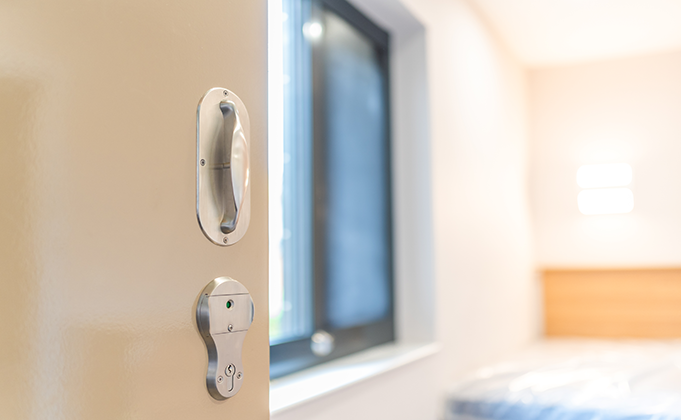
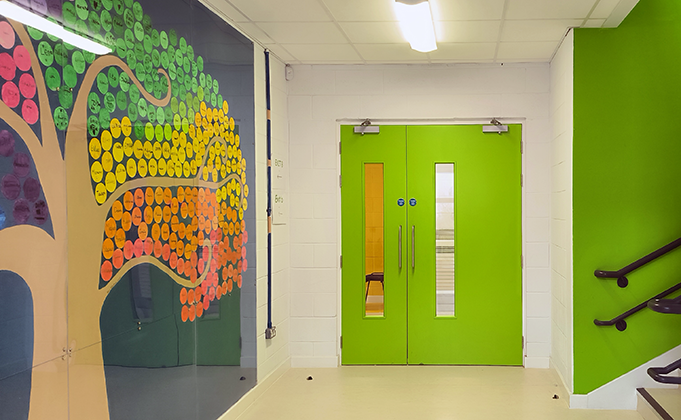
Education buildings experience a different kind of pressure. Unlike healthcare, the pressure does not usually come from specialist clinical requirements – it comes from volume, repetition and intensity of daily use.
In schools and universities, doors are not used carefully. They are pushed hard, leaned on, propped open and, at times, misused. Over an academic year, that repetition takes its toll. Lever handles loosen. Closers drift. Strike plates shift. Panic hardware absorbs more force than originally anticipated.
High-traffic areas such as stair cores, sports halls and assembly spaces are particularly vulnerable. Washrooms often show wear first. Issues often develop during term time and only become obvious during holiday periods – which is why inspection planning should align with the academic calendar.
Fire safety remains central. Escape routes must operate intuitively and reliably, especially where younger pupils are involved. Panic and emergency exit hardware should be checked in line with certification requirements, and doors must close and latch fully without assistance.
As buildings evolve – new safeguarding measures, access control upgrades, reconfigured spaces – hardware arrangements often change incrementally. Without structured review, performance and compliance can drift.
In education settings, hardware works hard every day. Planned inspection recognises that reality and protects safety, usability and lifecycle performance throughout the year.
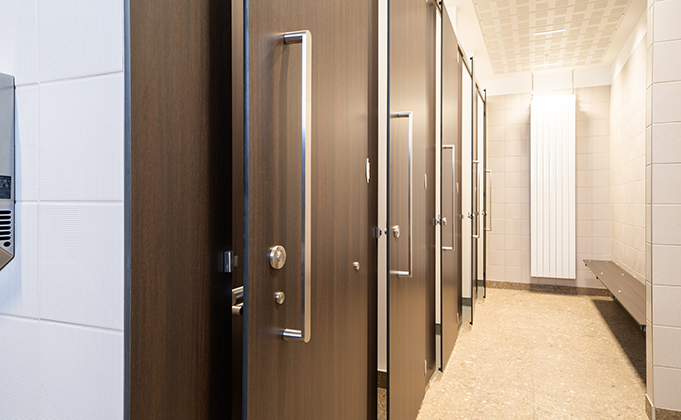
Hospitality environments bring a different set of expectations. Here, hardware must perform reliably, but it must also look right. Finishes are visible. First impressions matter. Guests notice details.
Hotel entrances, bedroom corridors, conference facilities and back-of-house areas all experience steady traffic. Bedroom locks cycle repeatedly. Closers and hinges operate continuously. Access control systems must integrate smoothly with guest management platforms. When something fails, it is not just an operational issue. It is a customer experience issue.
There is also a layered security dynamic. Public access areas sit alongside restricted zones. Digital locks, master-keyed cylinders and electronic access control systems must remain aligned and properly maintained. Battery-powered devices need monitoring. Strike alignment and latch performance must be consistent to prevent callouts and disruption.
Cleaning regimes add another consideration. Polished finishes, PVD coatings and stainless steel surfaces require correct maintenance. Abrasive or chemical cleaning can damage finishes and invalidate warranties. In coastal or spa environments, corrosion risk increases and inspection frequency should reflect that.
Fire and escape compliance remains non-negotiable. Panic hardware, emergency exit devices and door closers must continue to perform exactly as certified – even in buildings where aesthetic design is a priority.
In hospitality settings, hardware carries both functional and reputational weight. It must operate quietly, consistently and safely – without drawing attention to itself. Structured maintenance protects not just compliance, but the guest experience.
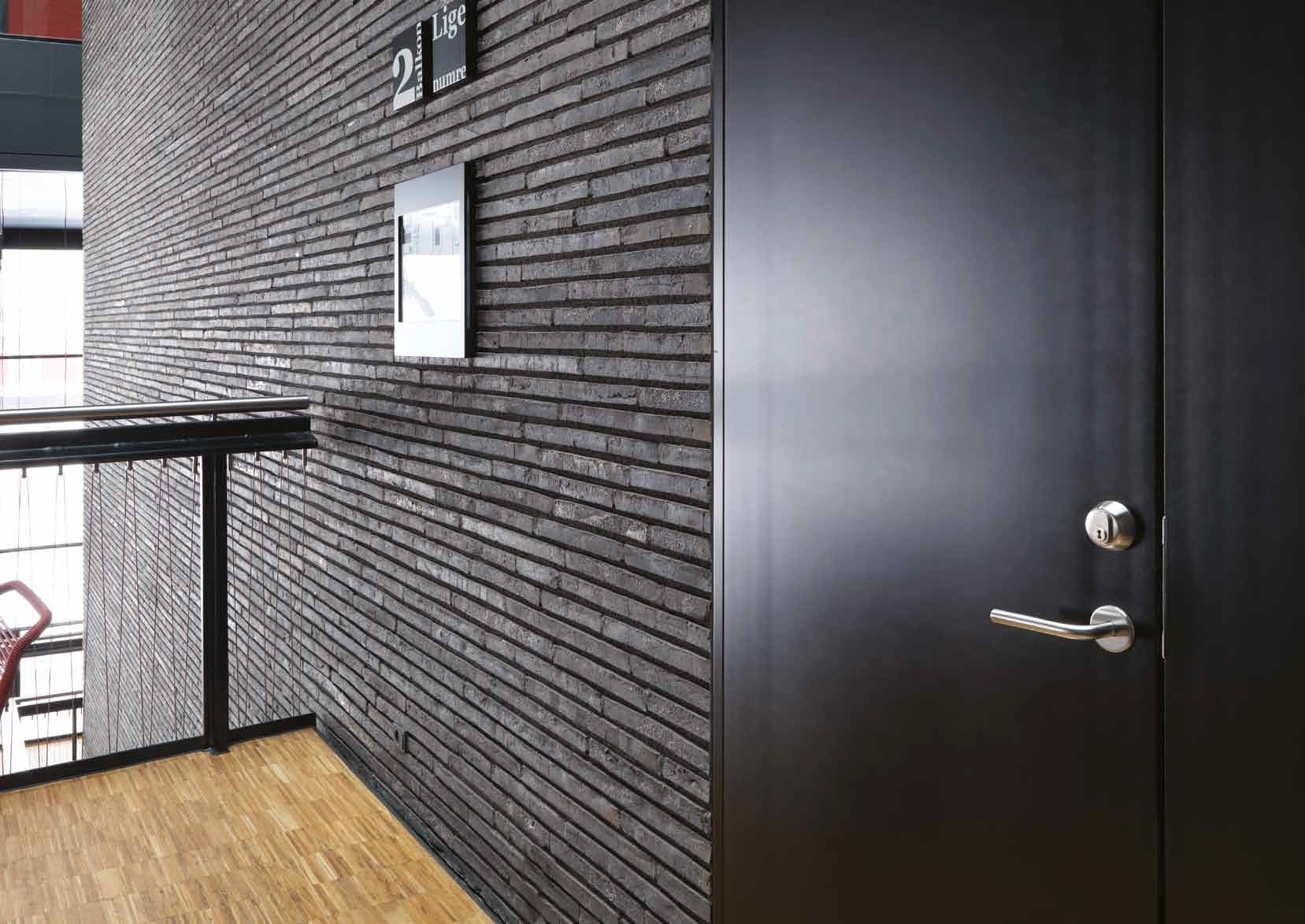
Commercial offices often appear lower risk – but they present their own challenges. Hybrid working patterns can mask hardware deterioration. A door that is used lightly for weeks may suddenly see heavy traffic during peak occupancy days, exposing issues that have gone unnoticed. Closers begin to drift. Latches fail to engage cleanly. Access control devices fall slightly out of alignment.
Office environments also evolve quickly. Layouts change. Teams move floors. Security zones are reconfigured. New access control layers are introduced. Hardware is adjusted incrementally – sometimes without a coordinated review of the wider door assembly.
Fire routes and stair cores remain critical. Emergency exit devices must be maintained in line with their certification. Doors must close fully and consistently, even when subjected to fluctuating occupancy levels.
In multi-tenant buildings, responsibility can also become blurred. Landlords manage common areas. Tenants manage internal suites. Without clear ownership of inspection schedules, compliance gaps can develop quietly.
Commercial buildings rely on smooth, predictable operation. When doors function properly, they support flow, accessibility and security without disruption.
Planned maintenance in office environments is less about intensity of use and more about consistency – ensuring that performance does not decline between inspection cycles. In 2026, even “low-risk” buildings benefit from structured hardware review. Quiet performance is still performance – and it requires oversight.
Integrating Hardware Into a Wider Service Strategy
Architectural hardware does not operate in isolation. It interacts with:
A siloed maintenance approach increases risk.
In 2026, organisations are moving toward coordinated service agreements that integrate:
That approach reduces duplication and strengthens compliance evidence.
From Maintenance to Accountability
Architectural hardware may not attract attention in the way façades or finishes do. Yet when it fails, the impact is immediate and visible. Maintenance is not a box-ticking exercise, nor is it simply about tightening fixings. It is about safeguarding the performance of the components that underpin life safety, accessibility, security and day-to-day operational continuity. The smallest elements in a building often carry the greatest responsibility.
If your hardware has not been formally reviewed within the last 12 months, particularly on fire routes, escape doors and high-traffic entrances, it is time to reassess your inspection programme. Not as a reactive response, but as part of a structured, defensible maintenance strategy.
Download our Hardware Maintenance Guide