
Modern Hospitality Access: Seamless Security & Exceptional Guest Experience
2nd March 2026
Modern Hospitality Access Solutions Where Seamless Security Meets Exceptional Guest Experience
Walk into any well-run hotel and you won’t think about the doors. You’ll think about the welcome, the lighting, the atmosphere. Access is invisible when it works properly. Behind that experience is a carefully considered system of automation, credentials, control logic and compliance. When it is not designed or maintained properly, it shows in delays at reception, guests locked out of rooms, or back-of-house areas left exposed.
Modern hospitality access is no longer just about replacing keys with cards. It is about managing movement across an entire building in a way that feels effortless to the guest and controlled to the operator.
The Shift in Guest Expectation
Guest behaviour has changed. People expect frictionless movement. They expect their phone to work as a credential. Queues are less tolerated. Doors should open automatically when approached with luggage. At the same time, operators are under pressure to protect assets, manage staff access, and document security events properly. Those expectations sit side by side. Good access design has to satisfy both.
Where Access Actually Impacts the Guest Journey
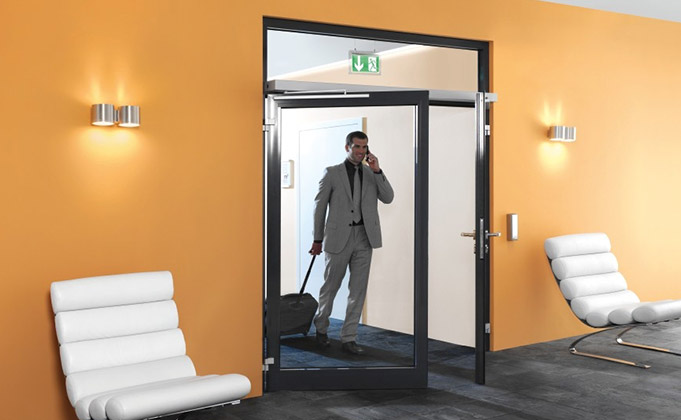
It starts before the reception desk. An automated entrance that opens cleanly, manages wind pressure and handles luggage traffic sets the tone. A revolving door that regulates flow while protecting energy performance plays a different role in a busy city hotel than it does in a coastal resort exposed to weather.
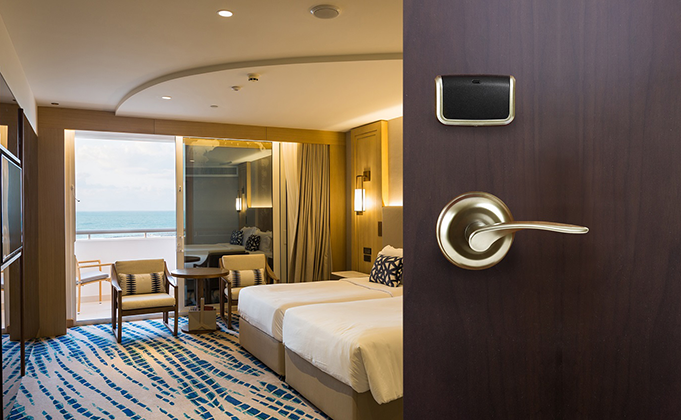
Inside, room access becomes part of the experience. RFID credentials remain standard, but mobile credentials are increasingly expected. The real value is not the card or phone itself – it is the integration behind it. When access links directly with the property management system, permissions activate and deactivate automatically. That reduces manual error and avoids awkward situations at check-out.
Back-of-house is where risk is often underestimated. Staff access to plant rooms, stores, service corridors and restricted floors must be controlled without slowing operations. Permissions need to be layered and adaptable, particularly in larger venues. Modern systems allow that level of flexibility, but only when designed as part of a joined-up strategy rather than pieced together over time.
The Operational Reality
From an operational perspective, access affects more than security. It influences:
- How quickly guests move at peak times
- How often reception deals with lost credentials
- Whether maintenance teams can isolate areas safely
- How incidents are reviewed and evidenced
The difference between a standalone locking system and an integrated access solution becomes clear when something goes wrong. With proper logging and integration, you can see who accessed what, when, and under which credential. Without it, investigation becomes guesswork.
End-to-End Hospitality Access: Designed, Delivered and Maintained
In hospitality, access solutions work best when they are considered as part of the full building strategy, not as isolated components. A modern entrance system, guest room locking, back-of-house access control and emergency egress hardware all need to operate together. Fire doors, panic devices, door closers and electromagnetic hold-open systems operate within the same safety framework. When coordinated properly from design through to maintenance, they support both guest experience and compliance without conflict.
This is where lifecycle thinking becomes important. Panic hardware requires regular inspection. Door closers must continue to perform consistently. Electromagnetic hold-open devices must release correctly under alarm conditions. Access control systems must integrate without ever compromising safe escape.
When hospitality access is delivered end to end – from specification and installation through to planned servicing and ongoing support – compliance does not sit in tension with design. It becomes embedded within it. The strongest hospitality projects are those where aesthetics, security, fire strategy and maintenance planning are aligned from the outset and supported throughout the life of the building.
When Modern Access Means Upgrading, Not Replacing
Not every hospitality project starts with a blank canvas. In many cases, operators are working with existing locking systems that are approaching end-of-life or no longer aligned with current guest expectations. Upgrading hospitality locking systems is often less disruptive than full replacement, particularly when existing door assemblies remain compliant and structurally sound.
Modern retrofit solutions can introduce RFID or mobile credentials, improve battery management, enhance audit functionality and strengthen integration with property management systems without major structural change. The key is assessing the condition of the existing hardware, confirming compatibility, and understanding how the upgraded locking solution will integrate with wider access control, emergency egress and servicing requirements.
At KCC, we regularly support hotels and hospitality venues in reviewing and upgrading their locking systems as part of a broader access strategy. In many cases, a phased upgrade approach allows operators to improve security and guest experience while managing cost and operational disruption.
Real-World Patterns We See
Across hospitality projects, the issues are rarely dramatic. They are usually small gaps that build over time. A hotel invests in upgrading bedroom locks to RFID or mobile credentials, but the back-of-house doors are left on ageing mechanical hardware. The public-facing areas look modern and secure, yet plant rooms, service corridors or staff access points rely on systems that have not been reviewed in years. Eventually, the weakest door is not the one guests see. It is the one they never do.
Battery-powered locks are another example. Most units provide clear low-battery warnings. In practice, those alerts are often postponed during busy periods. Replacement becomes reactive rather than scheduled. The result is not technical failure, it is a midnight call when a guest cannot enter their room and reception is under pressure.
Automated entrances follow a similar pattern. A sliding or revolving door is installed to improve arrival flow, but servicing intervals are not adjusted to reflect seasonal occupancy. During peak periods – weddings, summer tourism, conferences – footfall increases sharply. Minor alignment issues or sensor inconsistencies that went unnoticed during quieter months suddenly become visible.
None of these situations begin as serious defects. They arise from fragmented responsibility and isolated upgrades. Access performs properly when it is planned, maintained and reviewed as a connected system, not as a series of individual products.
What Good Looks Like
In practice, a well-considered hospitality access solution does not draw attention to itself. Guests move through the building without friction. Staff access is controlled without being obstructive. Emergency hardware works intuitively. Audit trails exist but are rarely needed.
From the operator’s perspective, good looks like:
Clear access zoning
Integrated credential management
Documented maintenance
Planned servicing
Alignment with fire and life-safety strategy
It is less about technology for its own sake and more about clarity, control and long-term reliability.
Looking Ahead
As hospitality continues to evolve, access will become more integrated, not less. Digital credentials, system integration and remote management are already standard expectations in new developments and refurbishments. The challenge is not choosing technology. It is ensuring that automation, locking systems, emergency hardware and servicing strategies are coordinated from day one. Modern access in hospitality is not about replacing keys. It is about shaping movement through a building in a way that protects people, assets and reputation – quietly and consistently.
Middle East
Laidlaw Gulf are the exclusive distributor of KCC Group hardware in the Middle East
+971 04 885 7404
[email protected]
Specialists in
high performance
doorsets